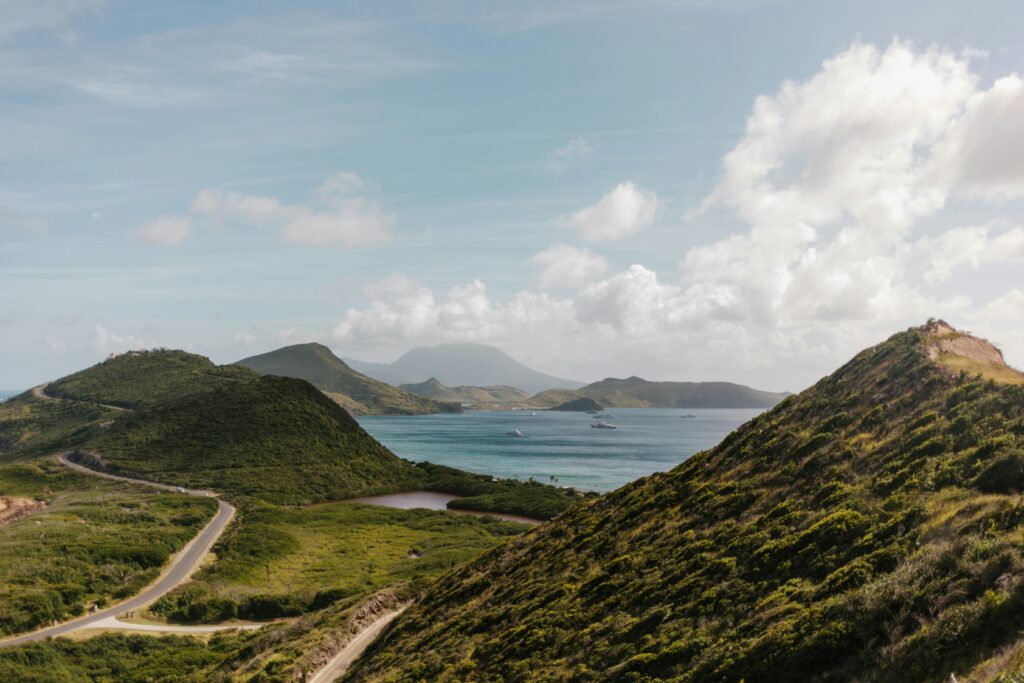
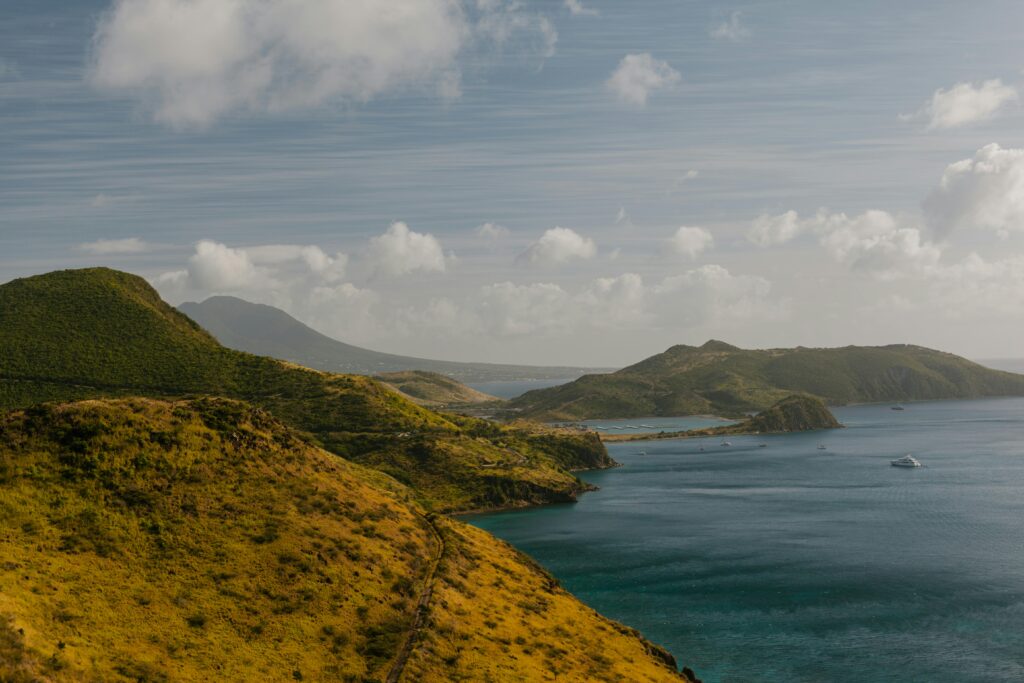
Nevis moves to a rhythm that feels increasingly rare in the Caribbean. It is an island that never learned the language of urgency, never felt the need to compete for attention, and never reshaped itself to match outside expectations. Life here unfolds slowly and deliberately, guided by routine, memory, and a deep connection to land rather than by schedules or spectacle. Nevis does not present itself through landmarks or must-see moments. It reveals itself through familiarity-roads walked daily, views taken for granted, and places that continue to exist simply because they always have.
This is an island where history is not curated into attractions but lived quietly alongside the present. Old estate paths still serve as walking routes. Villages function without interruption. Shorelines remain open, unannounced, and deeply personal. The pace encourages observation over consumption, presence over performance. Visitors who arrive expecting to be entertained often miss what makes Nevis distinctive. Those who slow down begin to understand it. These are not the most photographed places, nor the most discussed. They are moments and locations that reflect Nevis as it is-measured, self-contained, and intentionally unrushed. To experience Nevis well is not to see everything, but to stay long enough for the island to meet you where you are willing to slow down.
Where Is Nevis Island?
Nevis sits in the northern Caribbean, within the Lesser Antilles chain of the British West Indies. The island lies roughly 350 kilometers east-southeast of Puerto Rico and about 80 kilometers west of Antigua. Together with its neighboring island, Saint Kitts, it forms the twin-island Federation of Saint Kitts and Nevis. While closely linked politically, Nevis maintains a distinctly quieter character and a strong sense of independence.
How Nevis Became the Caribbean’s Quietest Secret?
Nevis has earned its reputation as the Caribbean’s quietest island not through branding, but through restraint. While much of the region evolved to meet demand-building outward, louder, faster-Nevis chose continuity over reinvention. Development remained measured. Roads stayed narrow. Villages stayed functional rather than performative. The island never repositioned itself as a spectacle, and in doing so, preserved something increasingly rare: normalcy.
What keeps Nevis quiet is not isolation, but intention. There are no cruise ports reshaping its shoreline, no high-rise skylines redefining its scale, and no urgency to compress the island into highlights. Life here still follows patterns set by land, weather, and familiarity. People greet each other by name. Places exist for use, not for display. Silence is not engineered-it is the natural outcome of an island that never chased volume.
Nevis also remains a secret because it does not advertise its depth. Its most meaningful experiences are subtle: estate paths still walked daily, beaches without names, villages that function without interruption. These are places that reveal themselves only when time is given freely.
In a region known for energy and expression, Nevis stands apart by refusing to compete. Its quiet is not absence-it is preservation. And that is precisely why those who find Nevis tend to keep it to themselves.
20 Quiet, Lesser-Known Things To Do in Nevis
Walk the Old Estate Roads of Lower Round Hill
Stone estate roads wind quietly through farmland and forest near Lower Round Hill, largely unnoticed by visitors. These paths once connected plantation life but now exist without purpose or signage. Walking here feels reflective, almost private. The land tells its story slowly, through texture rather than explanation. It’s a rare chance to move through Nevis without interruption.
Swim Along the Rocky Western Shore at Low Tide
Away from sandy beaches, the western shoreline reveals natural rock pools at low tide. These areas remain overlooked because they require timing and exploration. The water is calm, clear, and deeply quiet. Swimming here feels intimate, shaped by geology rather than design. It’s Nevis at its most elemental.
Wander the Village Backroads of Cotton Ground
Cotton Ground is often reduced to a single road, but its backstreets tell a fuller story. Walking slowly reveals gardens, quiet conversations, and homes shaped by routine rather than tourism. There are no attractions here-only life unfolding. This is where Nevis feels most grounded. Nothing asks to be noticed, yet everything matters.
Follow Local Footpaths on the Lower Slopes of Nevis Peak
Below the well-known summit trail, unmarked footpaths crisscross the lower slopes. These trails are used casually by locals, not hikers. They pass through shade, small farms, and forest clearings. Walking here feels personal and unstructured. It’s about presence, not achievement.
Visit an Unmarked Family Burial Ground
Small family cemeteries sit quietly beside villages or private land. They remain hidden because they are not public sites. Names repeat across generations, grounding history in lineage rather than dates. Visiting respectfully offers a powerful sense of continuity. These spaces reveal belonging in its most honest form.
Explore the Forgotten Coastline Near Indian Castle
This stretch of coast remains untouched due to rough access and lack of facilities. The shoreline is shaped by wind, coral stone, and silence. Few people linger here. Standing along this coast feels expansive and solitary. It’s a reminder that not all beauty asks to be comfortable.
Sit With the Wind Along the Northern Headlands
Nevis’ northern edge is exposed and often bypassed. Wind moves freely here, carrying sound and stillness in equal measure. There is little to do but sit and observe. That simplicity keeps it quiet. It’s a place for reflection rather than activity.
Walk Through Jessups Village at Midday
Jessups slows dramatically during midday hours. Shops quiet, conversations soften, and the pace becomes deliberate. This is when the village reveals itself most clearly. Walking here offers insight into everyday rhythms. It’s Nevis without performance.
Find Old Stone Wells Hidden in the Countryside
Scattered stone wells sit beside roads and fields, often unnoticed. They once dictated settlement and survival. Today, they remain as quiet markers of necessity. Finding one feels like uncovering a pause in time. These wells connect land, water, and memory.
Watch Fishermen Work Along the Eastern Shore
The eastern side of Nevis faces rougher seas and fewer visitors. Fishing here is physical, slow, and deliberate. Nets are mended by hand, often in silence. Observing this work reveals patience shaped by nature. It’s a rhythm unchanged by tourism.
Explore Overgrown Estate Worker Villages
Beyond estate houses lie smaller clusters of stone foundations-former worker villages now reclaimed by vegetation. These sites are rarely acknowledged or preserved. Walking among them feels quiet and humbling. They complete the island’s historical narrative. This is history without hierarchy.
Find an Unnamed Cove Along the Southern Coast
Small coves appear unexpectedly along Nevis’ southern edge. They remain unnamed because they are informal and unmaintained. Swimming here feels private and unhurried. There is no schedule, no crowd, no interruption. Just water and time.
Walk the Old Cane Paths Near Gingerland
Near Gingerland, old cane paths still cut through the land. They are no longer functional, yet remain walkable. Grass replaces wagons, silence replaces labor. Walking here feels meditative. History is felt underfoot rather than explained.
Pause at a Hilltop Without a Viewpoint Sign
Not every view in Nevis is labeled. Small hilltops offer expansive perspectives without railings or names. These spots remain hidden because they require wandering. Standing here offers scale and stillness. It’s a reminder that discovery is often unannounced.
Sit in a Village Churchyard When It’s Empty
Churchyards in Nevis serve communities, not visitors. When empty, they offer remarkable calm. Sitting quietly reveals the island’s relationship with faith, memory, and gathering. These spaces feel lived-in rather than symbolic. Silence here feels intentional.
Watch the Light Change Along the West Coast at Dusk
As evening settles, the west coast transforms quietly. Light shifts slowly, reflections soften, and movement slows. Few people stop to notice. Standing here feels restorative. It’s Nevis at the end of the day, unchanged and unbothered.
Walk a Village Road After Rain
After rainfall, village roads fill with scent and sound. Conversation resumes, children return outside, and the island breathes again. Walking at this moment feels intimate. It’s a small window into everyday continuity. These moments are never planned.
Spend Time at a Roadside Fruit Stand
Roadside fruit stands appear casually, selling what’s in season. They are not markets or attractions. Stopping here encourages conversation and patience. Fruit is chosen carefully, stories exchanged quietly. It’s a simple, human connection.
Follow the Coast Where Land Turns Rocky Again
Away from sandy beaches, rocky coastal stretches reappear. These areas remain empty because they don’t invite lounging. Walking here offers solitude and perspective. The island feels raw and self-contained. Beauty here is understated.
Eat Dinner at a Small Cookshop Without a Name
Some cookshops operate quietly, without signage or fixed hours. Meals are prepared for locals, not audiences. Sitting here requires slowing down. Food is simple, seasonal, and honest. This is Nevis as it feeds itself.
How to Get to Nevis from the UK
Travelers from the UK typically reach Nevis via the Caribbean’s major hubs. British Airways operates a direct service from London to Saint Kitts, with a brief stop in Antigua where passengers bound for St. Kitts and Nevis remain on board. Virgin Atlantic also flies to Antigua, from where onward connections to Nevis are available via regional carriers such as FlyMontserrat and Winair.
How to Get to Nevis from the USA
From the United States, Nevis is most commonly reached through regional connections. Flights from several major US cities connect through Puerto Rico (San Juan) or Sint Maarten, with short onward flights to Nevis operated by Cape Air, Seaborne, Tradewind, or Winair.
An alternative option is flying directly into Saint Kitts, where travelers can transfer to Nevis by taxi and water taxi across the narrow channel separating the islands. This route is often preferred for its simplicity. Private jet charters are also available for those seeking to avoid connections, particularly for larger groups.
Direct US services to Saint Kitts include
- American Airlines from Miami, New York (JFK), and Charlotte
- Delta Air Lines from Atlanta (seasonal, Saturdays)
- United Airlines from Newark (seasonal, Saturdays)
- Air Canada from Toronto (seasonal, Saturdays)
Regional Caribbean connections include
- LIAT with daily nonstop service from Sint Maarten and multiple weekly flights from Barbados
- Winair with regular nonstop flights from Sint Maarten
- Seaborne with daily nonstop service from San Juan
Where Quiet Is Not an Absence, but an Identity
Nevis does not ask to be discovered, and that is precisely why it remains unforgettable to those who take the time to understand it. Its quiet is not emptiness, but intention-a choice to preserve scale, routine, and meaning in a region often defined by reinvention. The experiences that define Nevis are not dramatic or headline-worthy; they are steady, personal, and deeply rooted in everyday life. To move through the island slowly is to see how land, history, and community still coexist without performance. In a Caribbean shaped by movement and noise, Nevis stands apart by staying exactly where it is-unrushed, self-contained, and quietly complete.