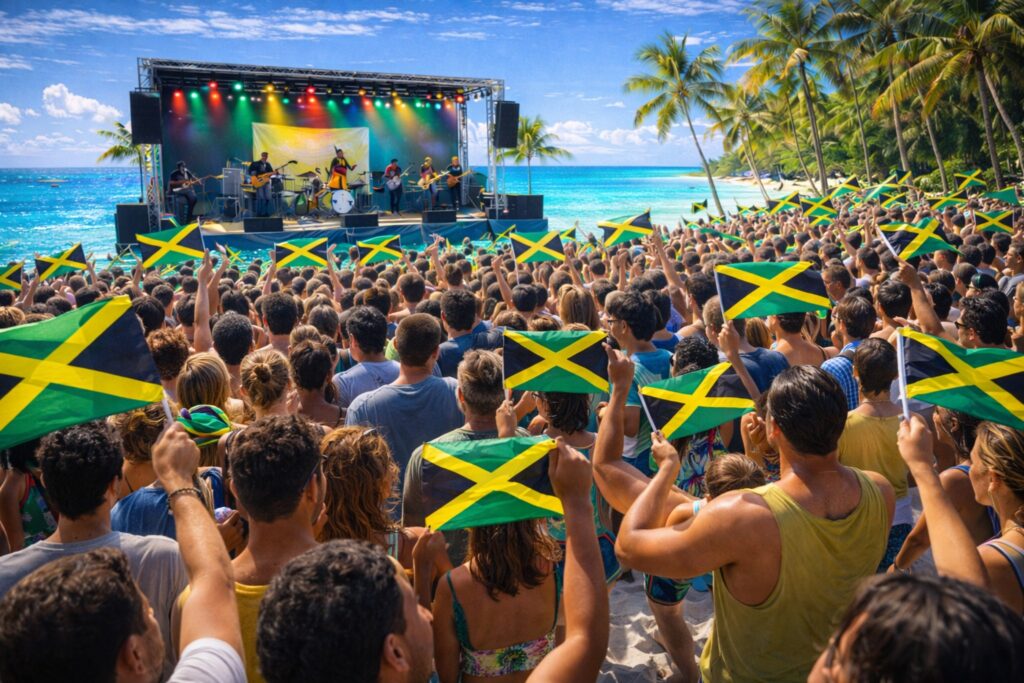
Every February, Jamaica turns its full cultural focus toward the music that reshaped global sound, political expression, and spiritual identity. Reggae Month Jamaica 2026 is not simply a series of concerts – it is a nationally recognized cultural observance that places reggae at the center of public life for an entire month. Streets, schools, museums, performance halls, radio stations, and community spaces align around one purpose: honoring reggae’s origins, preserving its legacy, and examining its future. For visitors, February becomes the most meaningful time of year to understand how deeply reggae is woven into Jamaica’s identity. For Jamaicans, it is a time of reflection, celebration, and national pride.
Verified Dates and What’s Officially Recognized
Reggae Month is officially observed throughout the entire month of February each year. Established by the Jamaican government in 2008, it is recognized as a formal national cultural observance. Unlike commercial music festivals that last a weekend, Reggae Month spans all four weeks of February, allowing for layered programming across educational, artistic, spiritual, and entertainment sectors.
The selection of February is intentional and historically grounded. It aligns with the birth anniversaries of two of Jamaica’s most influential reggae figures: Dennis Brown (February 1) and Bob Marley (February 6). These dates anchor the month with national tributes and commemorations.
Official recognition includes government-supported launch ceremonies, coordinated programming through the Ministry of Culture, partnerships with museums and cultural institutions, and international engagement through Jamaica’s diaspora networks. Reggae Month 2026 will once again run from February 1 through February 28, with events intensifying around key anniversary dates and during the final week of the month.
Introduction – What Is Reggae Month in Jamaica?
Reggae Month is Jamaica’s annual tribute to the genre that placed the island on the global cultural map. Observed every February, it celebrates reggae’s origins in Kingston’s neighborhoods, its political and spiritual depth, and its influence across continents.
Unlike a standard music festival focused solely on performances, Reggae Month blends education, performance, scholarship, and community engagement. Schools incorporate reggae history into lesson plans. Radio stations curate archival playlists. Museums host themed exhibitions. Universities organize panel discussions exploring reggae’s sociopolitical significance.
At its core, Reggae Month is about recognition — recognition that reggae is not simply entertainment but a powerful vehicle for storytelling, protest, faith, and identity. It acknowledges the artists who carried Jamaica’s voice abroad and ensures that younger generations understand the roots of the sound they inherit.
The Origins of Reggae Month
Reggae Month was formally launched in 2008 by Jamaica’s Ministry of Culture, Gender, Entertainment and Sport. The initiative was created to institutionalize celebration of reggae’s contributions to Jamaican society and to elevate its historical documentation.
Before 2008, tributes to reggae legends were often informal or artist-driven. The establishment of Reggae Month created a structured national framework that:
- Preserves reggae history through curated programming
- Provides platforms for emerging artists
- Encourages academic research on Jamaican music
- Promotes cultural tourism
February was chosen not only for its symbolic birthdays but also to position reggae at the center of national reflection early in the calendar year. The initiative reinforces that reggae is foundational to Jamaica’s cultural identity.
By creating Reggae Month, Jamaica formally declared reggae as a pillar of its heritage — equal in importance to its language, cuisine, and historical milestones.
Why February Matters – Bob Marley and Dennis Brown
February’s emotional resonance stems largely from two birthdays.
February 1 – Dennis Brown
Dennis Brown, known as “The Crown Prince of Reggae”, became one of the most prolific vocalists of the 1970s. His smooth delivery and socially conscious themes influenced generations of singers. During Reggae Month, tribute concerts often highlight his catalog, and radio stations dedicate programming blocks to his music.
February 6 – Bob Marley
Bob Marley’s birthday transforms Jamaica into a global pilgrimage site. Celebrations frequently include:
- Tribute concerts featuring local and international artists
- Educational symposiums examining Marley’s lyrics and philosophy
- Museum tours at the Bob Marley Museum
- Community service initiatives
Marley’s legacy extends beyond music; he became a symbol of resistance, Pan-African consciousness, and spiritual awakening. His birthday anchors Reggae Month with reflection and celebration.
Reggae’s Journey – From Kingston to the World
Reggae developed in late 1960s Kingston, evolving from ska and rocksteady. Initially characterized by slower tempos and heavy basslines, reggae quickly became a voice for marginalized communities.
During the 1970s, artists such as Bob Marley, Peter Tosh, and Burning Spear carried reggae onto international stages. The genre’s themes of social justice, equality, and spiritual identity resonated globally.
Reggae influenced punk in the United Kingdom, hip-hop in New York, and countless global pop movements. In 2018, UNESCO recognized reggae as an Intangible Cultural Heritage of Humanity, affirming its worldwide significance.
Reggae Month 2026 – What to Expect
Reggae Month 2026 will unfold as a layered, nationwide cultural celebration that blends heritage preservation with contemporary creativity. Rather than concentrating activity into a single weekend, Jamaica intentionally spreads programming across all four weeks of February, allowing space for both major concerts and smaller community-driven experiences.
The month traditionally opens with an official launch ceremony organized by Jamaica’s Ministry of Culture. This event sets the tone for the weeks ahead. Government leaders, veteran musicians, cultural historians, and members of the creative community gather to outline the year’s theme, recognize honorees, and reaffirm reggae’s role in national identity. The launch often includes live performances, spoken-word tributes, and formal acknowledgments of industry pioneers.
The first week of February carries heightened emotional significance because of the birthdays of Dennis Brown and Bob Marley. Tribute concerts during this period typically feature reinterpretations of classic songs, performances by contemporary artists influenced by reggae’s golden era, and appearances by musicians who worked alongside these icons.
As the month progresses, programming expands in both scale and diversity. Outdoor street festivals animate public spaces with live bands, dance performances, and artisan markets. Sound system clashes – an essential element of Jamaican music culture – showcase competing selectors who test their musical knowledge, crowd control, and rare vinyl collections. These events are as much about cultural credibility as entertainment.
Gospel reggae concerts add a spiritual dimension, highlighting artists who fuse reggae rhythms with messages of faith and upliftment. Academic panels and public lectures invite scholars, producers, and veteran performers to discuss reggae’s political legacy, its relationship to global social movements, and its evolving identity in a digital era. Film screenings and documentary premieres deepen historical understanding, often followed by Q&A sessions with filmmakers or cultural commentators.
What distinguishes Reggae Month is its balance. Institutional events at formal venues coexist with grassroots street energy. Large arenas host thousands, while neighborhood courtyards host intimate gatherings. The programming is both structured and spontaneous – mirroring reggae’s own evolution from local expression to global influence.
Key Events During Reggae Month Jamaica 2026
Kingston as the Cultural Hub
Kingston stands at the heart of Reggae Month. As the birthplace of reggae, the capital becomes the epicenter of activity throughout February.
Major headline concerts frequently take place at the National Arena, a large indoor venue capable of hosting major productions with high-caliber staging and lighting. These events often feature a mix of legendary performers and contemporary stars, symbolizing reggae’s generational continuity.
Open-air concerts at Emancipation Park provide free public access, making reggae accessible to families and visitors alike. The park’s open lawns transform into communal gathering spaces where blankets, food vendors, and live bands create a relaxed yet vibrant environment.
The historic Devon House often hosts curated music showcases and cultural markets. Its colonial-era architecture and gardens create an elegant backdrop for acoustic performances, art installations, and fashion pop-ups inspired by reggae aesthetics.
Downtown Kingston pulses with informal activity. Pop-up performances appear on street corners. Murals celebrating reggae icons become photo backdrops. Radio stations broadcast live from mobile setups, creating an immersive citywide soundtrack.
Montego Bay and Beyond
While Kingston remains central, Montego Bay offers a coastal counterpart to the capital’s intensity. Resort properties host curated reggae nights that combine live performances with beachside ambiance. These events allow visitors to experience authentic Jamaican music within relaxed tropical settings.
Community centers across the island host parish-level celebrations, ensuring that Reggae Month extends beyond tourist zones. Smaller towns organize concerts featuring local bands, cultural competitions, and youth talent showcases. This decentralized approach reinforces reggae’s national reach.
Live Music, Sound Systems, and Dancehall Nights
Reggae was born from Jamaica’s sound system culture, where mobile DJs and selectors transformed neighborhoods into open-air dance floors. During Reggae Month, this foundational element takes center stage.
Sound system clashes feature towering speaker stacks and vinyl-driven competition. Selectors aim to outplay rivals with rare tracks, dubplates, and crowd-moving rhythms. The atmosphere is energetic and participatory, with audiences reacting vocally to each musical shift.
Roots reggae concerts provide contrast, emphasizing live instrumentation – bass guitars, rhythm sections, and harmonized vocals. Dub showcases explore experimental sonic landscapes, manipulating echoes and instrumental layers.
Dancehall nights, though stylistically distinct from classic reggae, reflect reggae’s evolutionary branch. Including dancehall acknowledges the genre’s adaptability and its influence on global urban music scenes.
Reggae and Rastafari Influence
Rastafari philosophy profoundly shaped reggae’s lyrical content. Early reggae articulated themes of liberation, repatriation, social justice, and spiritual awakening drawn from Rastafarian beliefs.
Nyabinghi drumming ceremonies sometimes appear within Reggae Month programming, connecting contemporary audiences with ancestral rhythms. These gatherings emphasize spiritual grounding and communal reflection.
Ital food vendors – offering plant-based dishes aligned with Rastafarian dietary principles – frequently appear at events. Food, spirituality, and music intersect, reinforcing reggae’s holistic cultural framework.
Museums and Cultural Spaces to Visit During Reggae Month
The Bob Marley Museum offers immersive exhibits detailing Marley’s life, activism, and recording history. Guided tours during Reggae Month often include special programming tied to February anniversaries.
The Trenchtown Culture Yard provides insight into the Kingston neighborhood that nurtured many reggae pioneers. Visitors can see preserved recording spaces and learn about community influences.
The Peter Tosh Museum highlights Tosh’s militant activism and solo contributions to reggae’s political voice.
These institutions provide depth beyond live performances, grounding celebration in historical context.
Emerging Artists and the Future of Reggae
A contemporary reggae revival movement has elevated young artists who honor traditional roots while incorporating modern production techniques. These performers frequently headline Reggae Month stages alongside established legends.
Collaborations with Afrobeats producers and global artists demonstrate reggae’s continuing adaptability. Digital streaming platforms have broadened the genre’s reach, allowing emerging Jamaican voices to gain international audiences.
Reggae Month serves as both tribute and launchpad – honoring pioneers while spotlighting future torchbearers.
Late-February Festival Energy in Kingston
By the final stretch of February, Kingston carries a distinct momentum that feels both electric and intentional. The city’s nightlife expands beyond weekend rhythms into a near-daily celebration of live performance, cultural dialogue, and spontaneous musical expression. Restaurants host acoustic pop-ups, independent venues curate themed evenings, and established stages present high-production showcases that draw packed audiences. The streets hum with anticipation as visitors and locals alike navigate between venues, chasing overlapping sets and special appearances.
The final days of Reggae Month often carry an emotional undertone. Artists who grew up studying reggae’s pioneers share space with veterans whose voices helped define earlier eras. These multi-generational collaborations are more than performance – they represent continuity. Musicians reinterpret classics, experiment with new arrangements, and occasionally debut fresh material that nods to the past while signaling what lies ahead.
As February closes, Kingston feels unified by rhythm. The crescendo of events does not feel chaotic; it feels purposeful – a city consciously honoring its legacy before transitioning back into everyday tempo, carrying the echoes of celebration forward into the rest of the year.
How Jamaica Celebrates Reggae Beyond the Stage
Reggae Month extends far beyond microphones and amplifiers. Across the island, classrooms transform into cultural forums where students study reggae’s lyrical themes, historical context, and musical structure. Teachers introduce songwriting exercises inspired by social commentary, encouraging young people to understand reggae not simply as entertainment, but as a tool for expression. School assemblies frequently include student-led performances that reinterpret timeless tracks, reinforcing cultural pride at an early age.
In the visual arts community, painters and sculptors translate reggae’s messages into canvas and form. Gallery exhibitions during February often explore themes of liberation, migration, spirituality, and resilience – core ideas that have long defined the genre. Designers also participate in the celebration. Fashion collections debut with subtle nods to reggae’s visual heritage: earthy tones, bold graphics, and modern reinterpretations of classic silhouettes.
Community organizations leverage the month to host mentorship workshops, poetry readings, and neighborhood gatherings. These programs channel reggae’s enduring themes of empowerment into tangible action, ensuring that its cultural influence remains grounded in everyday life rather than confined to performance venues.
What Makes Reggae Month 2026 Special
Every year brings a renewed lens through which Jamaica reflects on its musical heritage, and 2026 is expected to deepen that perspective. While the month consistently honors iconic figures, this edition is likely to emphasize preservation – not only of songs, but of stories, production techniques, and oral histories that shaped reggae’s evolution. Cultural organizers have increasingly prioritized documenting firsthand accounts from producers, session musicians, and community figures whose contributions are often less visible but equally vital.
Intergenerational exchange is poised to take center stage. Conversations between veteran performers and emerging artists are expected to form part of curated programming, bridging decades of creative experience. Workshops may focus on the craft of songwriting, the ethics of sampling, and the responsibilities of representing Jamaican culture on international platforms.
The 2026 observance also arrives at a time when global audiences are rediscovering roots-oriented sounds. That broader interest gives this year’s programming added relevance. Rather than resting solely on legacy, Reggae Month 2026 is positioned to reinforce continuity – demonstrating how the genre remains adaptable, reflective, and forward-thinking.
Why Reggae Month Jamaica 2026 Is More Than a Music Festival
Reggae Month operates on a deeper cultural frequency than a typical music gathering. While concerts and performances are central, the observance is fundamentally about collective memory and national storytelling. Reggae has long articulated the lived experiences of ordinary Jamaicans – addressing inequality, faith, struggle, and aspiration. Dedicating an entire month to its recognition underscores its enduring importance to the country’s social fabric.
The observance also serves as an anchor of cultural diplomacy. Reggae has shaped global conversations about justice and identity, and Jamaica’s stewardship of the genre reinforces its role as originator rather than observer. By organizing structured programming that blends scholarship, performance, and community engagement, the nation affirms that reggae’s value extends beyond commercial charts or streaming metrics.
In essence, Reggae Month functions as an annual reaffirmation of identity. It preserves artistic lineage, uplifts emerging voices, and strengthens cultural continuity. The celebration is not transactional – it is intentional, rooted in pride and purpose, ensuring that reggae’s influence remains vibrant for generations to come.
Practical Travel Guidance for Reggae Month Jamaica 2026
Choosing the Right Time in February
Since Reggae Month spans the entire month of February, the ideal time to visit depends on what kind of experience you’re seeking. The opening week carries special significance, particularly around February 6, when tributes connected to Bob Marley’s birthday shape the cultural atmosphere. This period tends to feel reflective and heritage-focused.
The middle weeks of February often provide a well-balanced experience. Live performances, community programming, and museum events are active, yet accommodations and transportation may be slightly less competitive than peak weekends.
The final stretch of the month typically builds toward high-energy closing events. Schedules often cluster in the last week, making it possible to attend multiple concerts in a short span. If you prefer dense programming and a celebratory finale, the latter part of February is often the most dynamic.
Where to stay
Kingston remains the most strategic location if your primary goal is music immersion. The majority of headline concerts, panel discussions, and official events are centered in and around the capital. Staying in New Kingston or nearby neighborhoods provides easier access to venues and reduces commute time for late-night events.
If your visit also prioritizes beach time, the North Coast – including Montego Bay or Ocho Rios – offers a more resort-oriented setting. However, keep in mind that traveling between the coast and Kingston for evening concerts requires planning and reduces flexibility for spontaneous event attendance.
Getting around the Island
Evening events often run late, particularly concerts and sound system gatherings. Arranging reliable transportation in advance is strongly recommended. Whether using private drivers or established ride services, confirming return logistics before the event begins helps avoid last-minute challenges. Traffic patterns in Kingston can shift quickly on major concert nights, so allowing buffer time is wise.
Budget Planning
Reggae Month is not packaged as a single-ticket festival. Each event operates independently, with pricing determined by venue size, performer lineup, and production scale. Many community sessions and open-air gatherings remain free to attend, while larger concerts and premium showcases require advance ticket purchases.
Travel costs will vary depending on accommodation style, dining preferences, and the number of ticketed events you choose to attend. Reviewing official event listings closer to February 2026 will provide clarity on individual pricing, but there is no single pass covering the entire month – expenses are determined by the experiences you select.
Where Rhythm Becomes National Identity
In Jamaica, reggae is not background music. It is narrative, resistance, faith, and pride woven into basslines and drum patterns. Reggae Month 2026 affirms that the sound born in Kingston continues to shape global culture while grounding Jamaican identity. February becomes a living archive – a month where history sings, culture gathers, and rhythm defines a nation.